

Visualization II, “Vis II”
2006-12
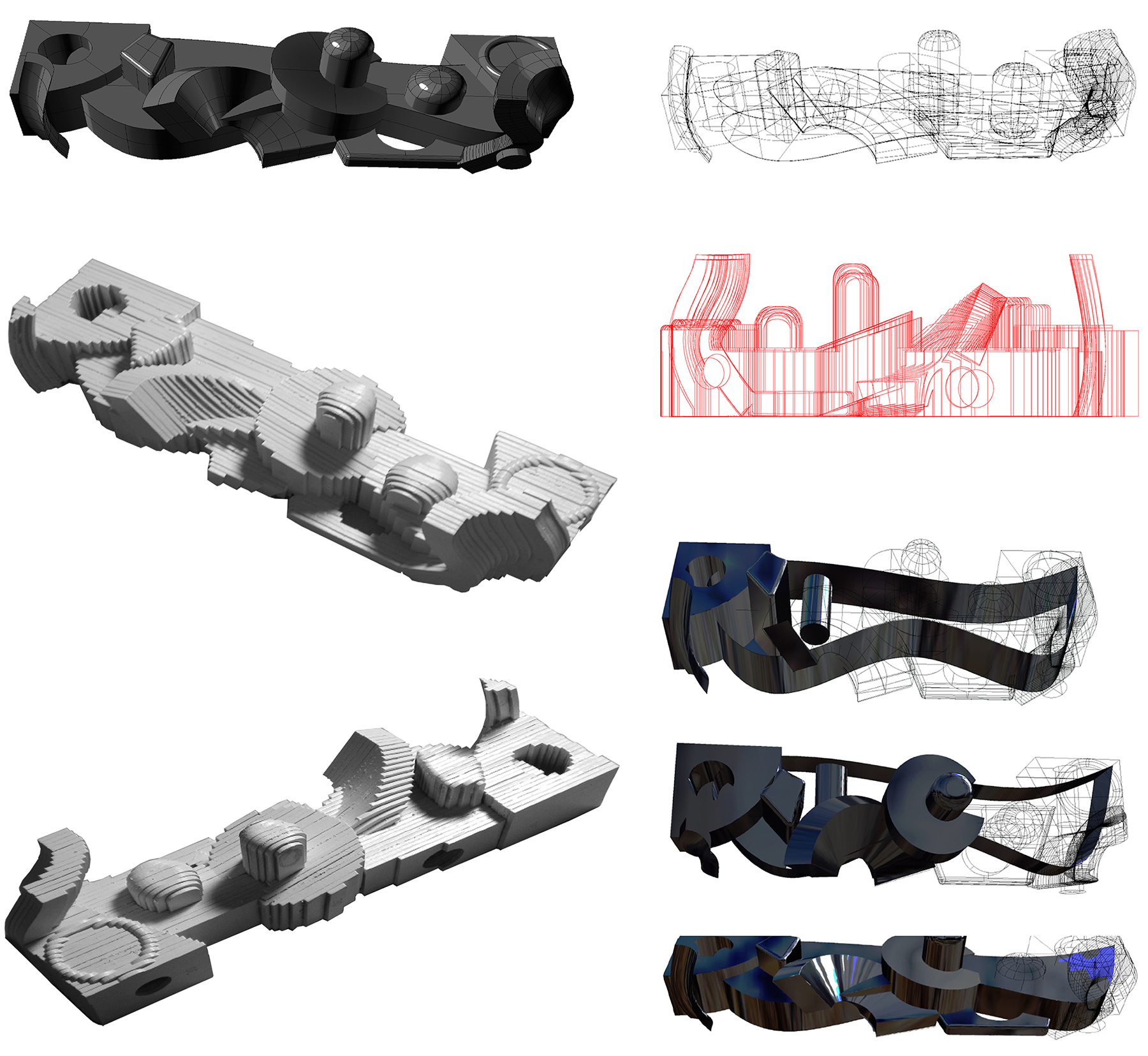
This intermediate visualization course engages digital modeling as both a design strategy and a fabrication method. For most students, it serves as their first exposure to CAD. Working across platforms—AutoCAD, Rhino, and Grasshopper—they translate 2D patterns into 3D spatial constructs. My teaching foregrounds spatial thinking through formal articulation. Digital outputs are materialized via laser cutting and 3D printing, each requiring distinct strategies: reassembling sectional layers for laser-cut models and orienting forms to anticipate material behavior during additive printing. Through these workflows, students cultivate a tactile, haptic understanding of form, structure, and spatial logic.
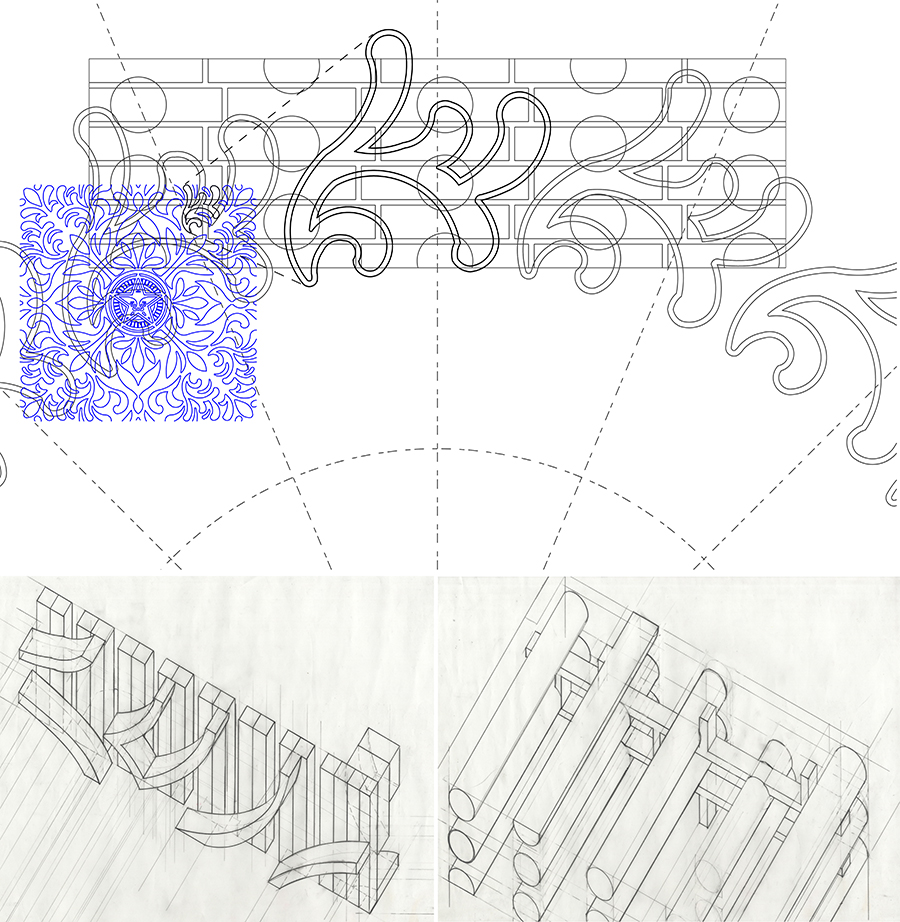 hand drafted orthographic and axonometrics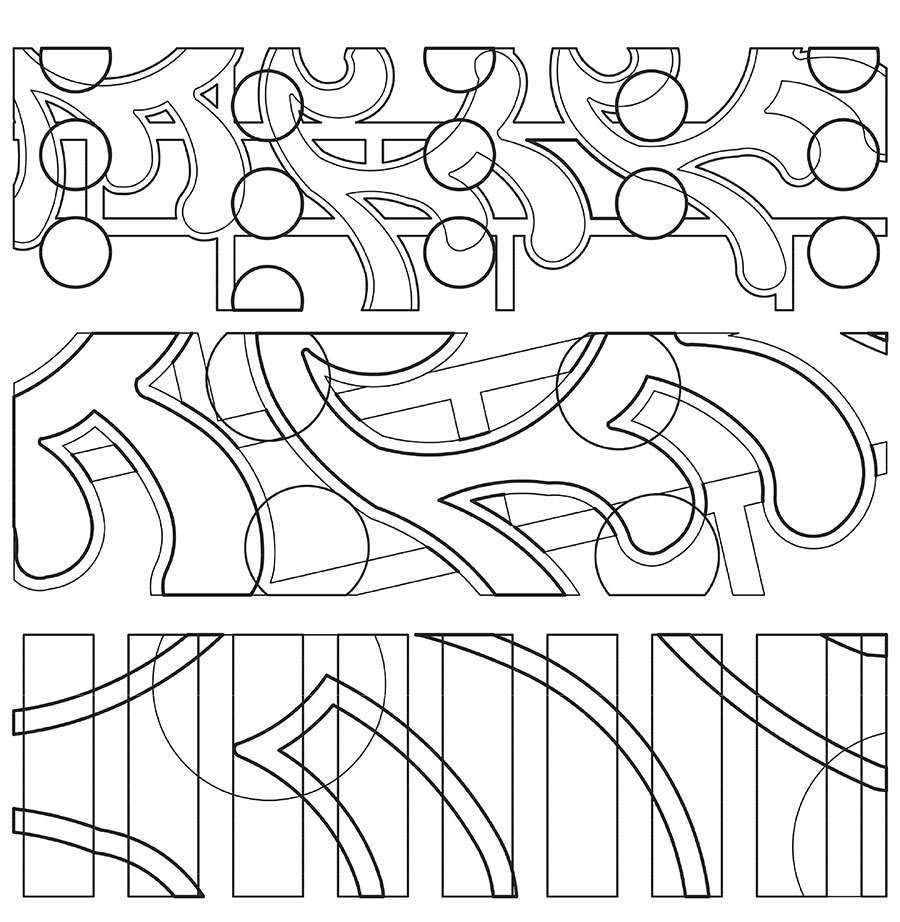
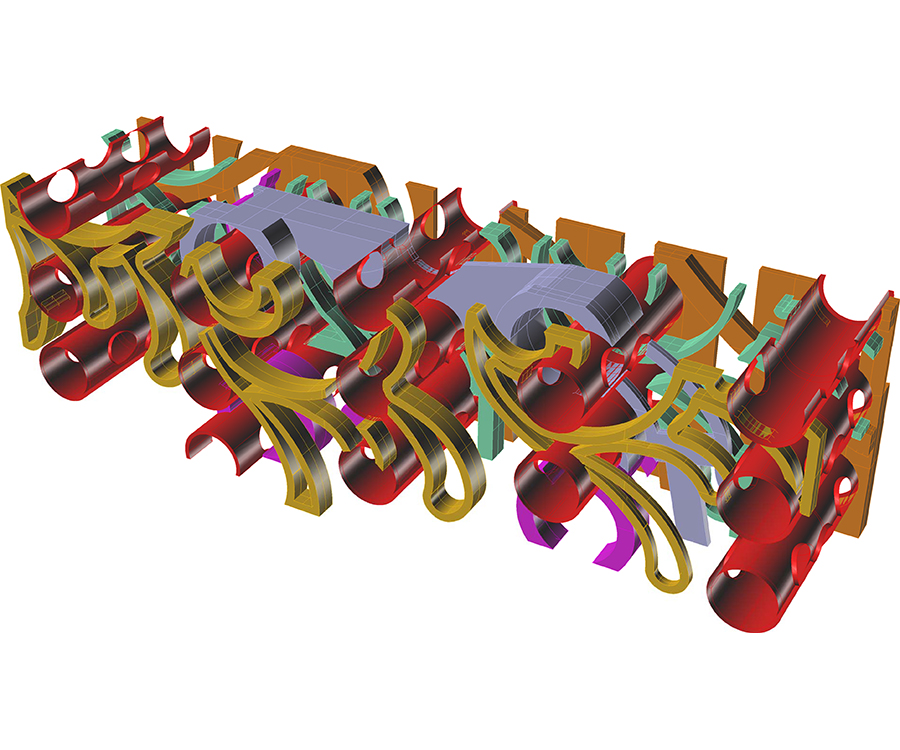 rhino model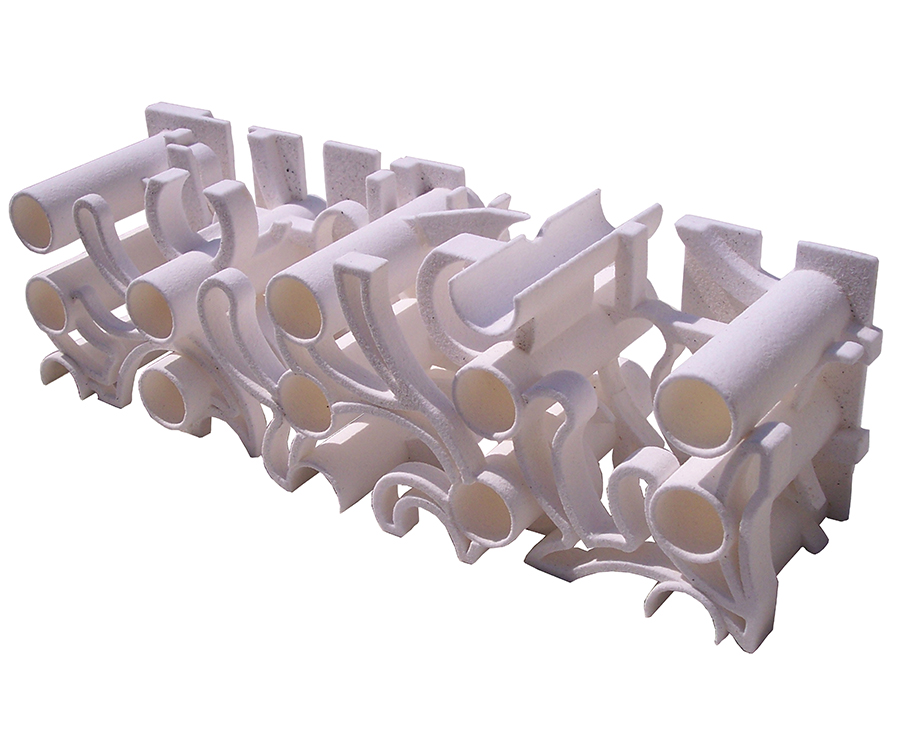
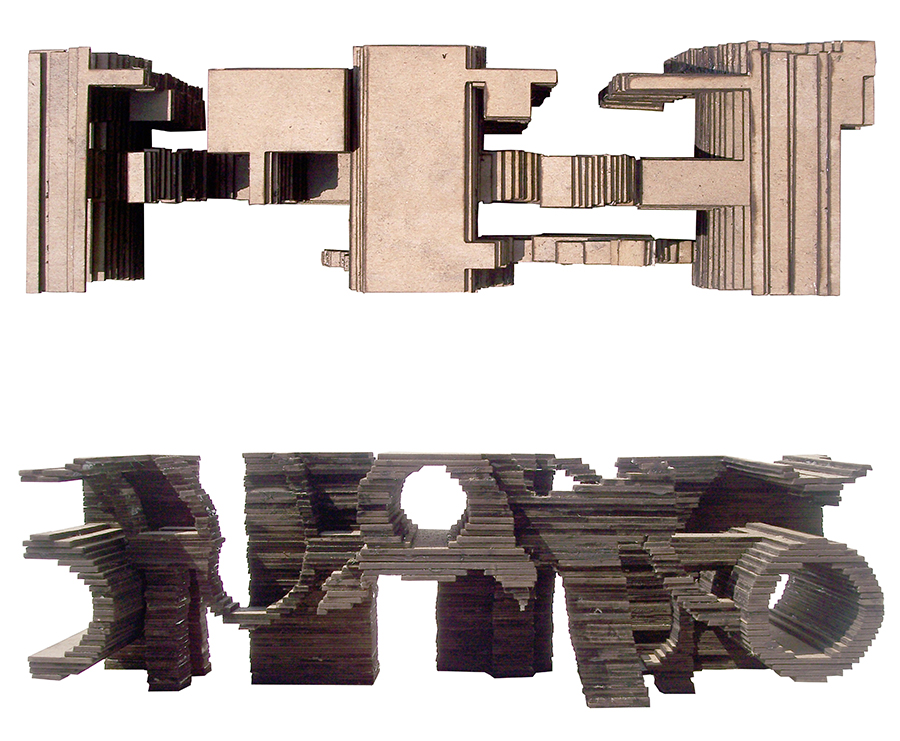
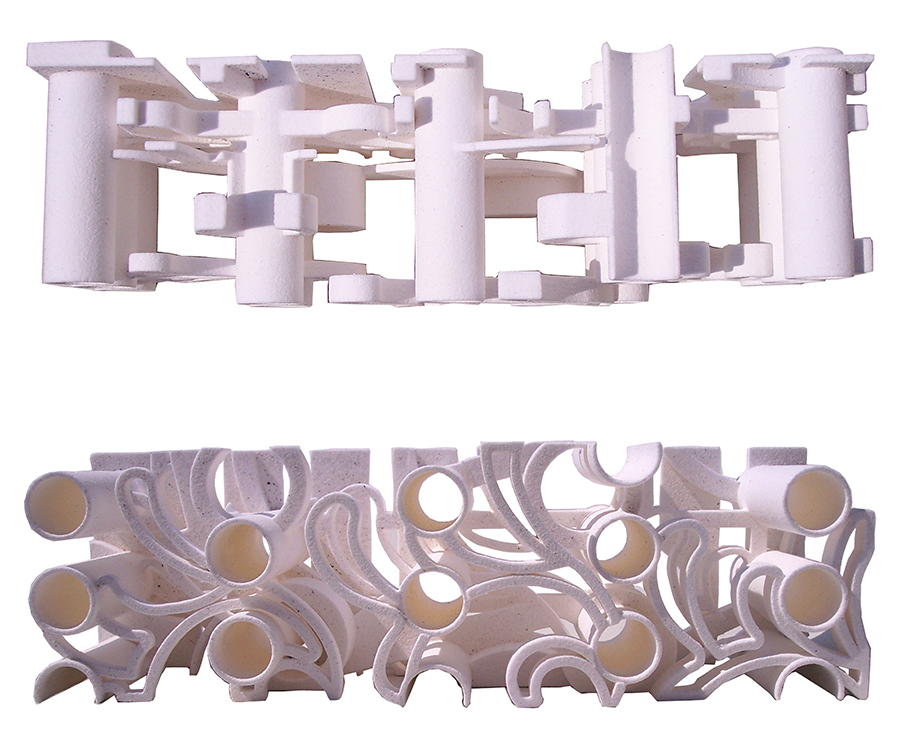 model – 3D printed
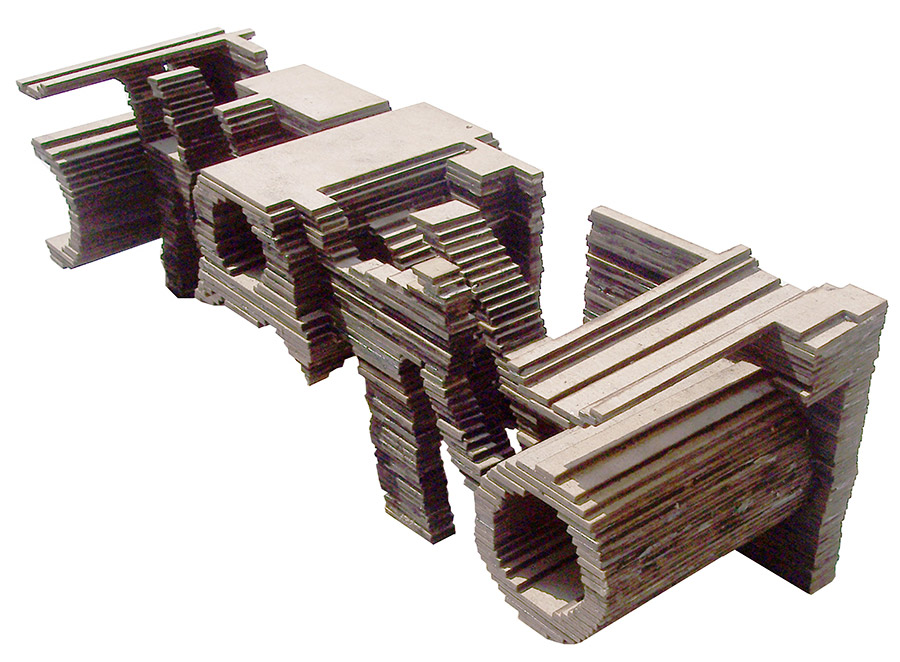 model – laser printed
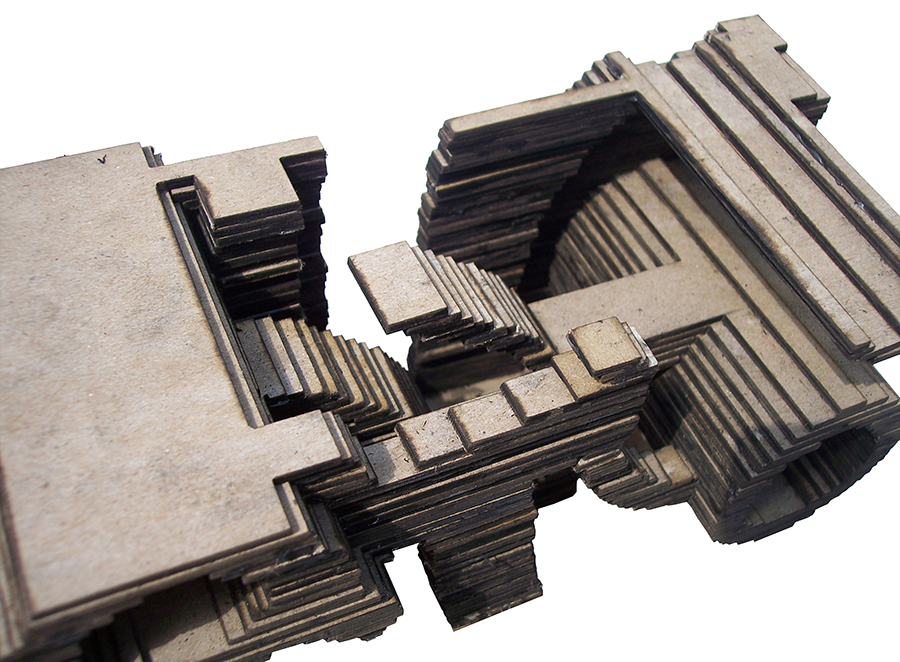 model – laser printed (detail
project A - hand drawn 2D pattern analysis, rhino 3D, digital fabrication models: laser and 3D printer
 project B - rhino 3D, digital fabrication: 3D printed model
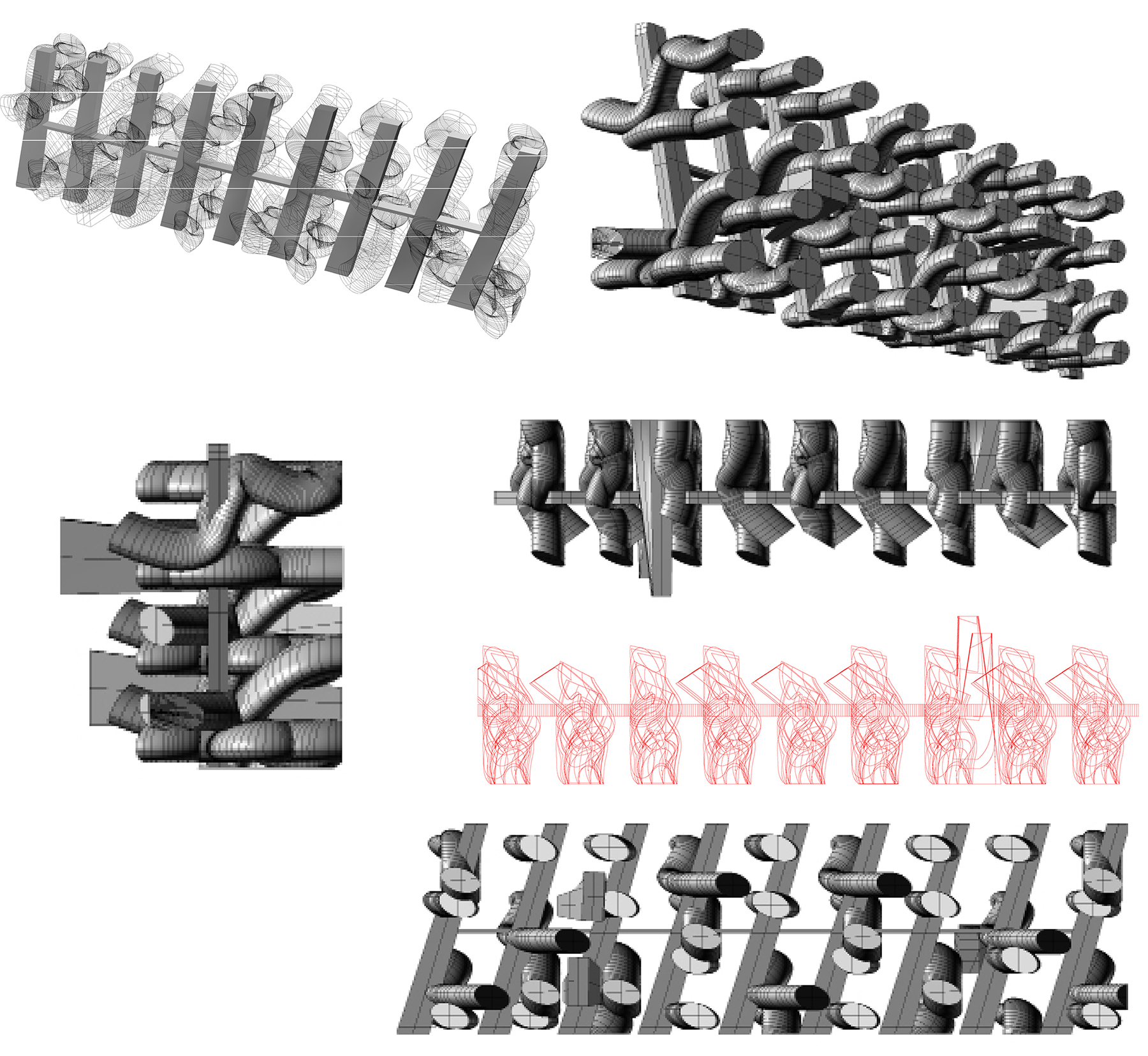 project C - rhino 3D model anaylsis